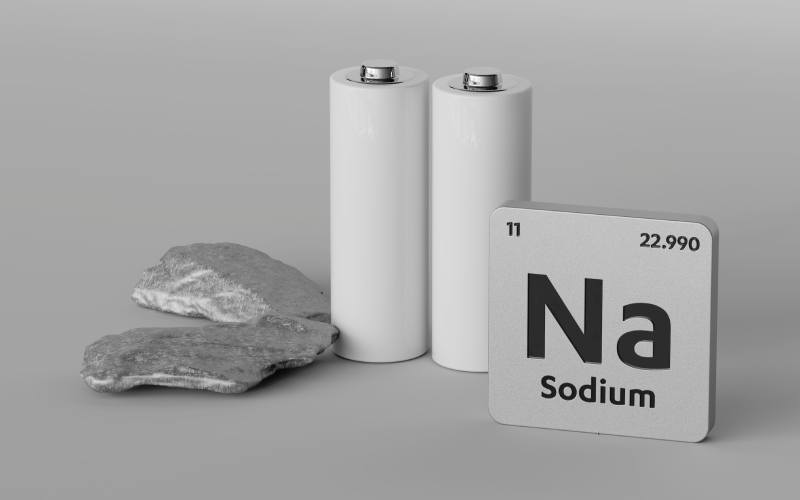
As the energy transition accelerates, sodium-ion batteries (hereafter “sodium batteries”) are gradually emerging as one of the important complementary alternatives to lithium-ion batteries (hereafter “lithium batteries“), with the two technologies demonstrating complementarity across different application scenarios. Although sodium batteries fall short of lithium batteries in energy density, their advantages in low cost, safety, and sustainability make them competitive in markets such as stationary energy storage, two-wheelers, and low-speed vehicles.
In recent years, sodium battery technology has advanced rapidly, with energy density already reaching 120–160 Wh/kg and showing potential to break through 200 Wh/kg; unit costs are expected to fall below $45/kWh in the future. By 2025, multiple companies have already launched commercial products — including Farasis Energy’s mass-produced electric vehicles, Japan’s Elecom’s portable power banks, Bluetti’s portable energy storage systems, and CATL’s Naxtra and Freevoy hybrid battery modules.
Overall, the market model for sodium batteries will take the form of “energy storage as the primary application, vehicle use as secondary,” complementing lithium batteries and establishing itself as an indispensable key battery technology in the energy transition.
